
If you want to sell on Etsy but still don’t know how to get started, you’ve come to the right place. Today, we’ll walk you through everything you need to know, step by step, to help you become a successful Etsy seller!
But before you get started, it’s important to properly open and set up your Etsy shop. That’s why we’ve created this free course (formerly $24), where you’ll learn the exact setup used for an Etsy shop that has already generated over $15,000 in sales.
What Is Etsy?
Etsy is an online marketplace known primarily for handmade products. Its focus is on unique items, many of which can be personalized to meet customers’ specific needs.

Products are sold by entrepreneurs and independent creators who manage their own inventory and shipping, while Etsy provides the marketplace, advertising tools, and secure payment systems that make selling much easier.
One of the things that makes Etsy especially appealing to people who want to start a business with little money is its low upfront cost for listing products on the platform. And here’s the best part: there are business models on Etsy where you don’t even need to hold inventory, such as selling print-on-demand products and digital products.
What Do I Need to Know Before Opening an Etsy Shop?
Before opening an Etsy shop, there are a few things you should keep in mind:
1. Make Sure You’re Allowed to Sell on Etsy in Your Country
Etsy is not currently available for sellers in every country, so it’s important to check Etsy’s official list of countries where selling is currently supported. If you live outside the United States but Etsy allows sellers from your country, you can still sell to customers in the U.S. without any problem. In fact, selling to the U.S. market can be a great option, as it is one of the countries where Etsy shoppers purchase the most products.
These are the countries where Etsy Payments can currently be activated, meaning sellers in these countries can sell on Etsy:
- Argentina*
- Australia
- Austria
- Bélgica
- Brasil*
- Bulgaria
- Canadá
- Chile*
- China*
- Croacia
- Chipre
- República Checa
- Dinamarca
- Egipto*
- Estonia
- Finlandia
- Francia
- Georgia*
- Alemania
- Grecia
- Hong Kong
- Hungría
- India*
- Indonesia
- Irlanda
- Israel
- Italia
- Japón*
- Kazajistán*
- Letonia
- Lituania
- Luxemburgo
- Malasia
- Malta
- México
- Marruecos
- Países Bajos
- Nueva Zelanda
- Noruega
- Pakistán*
- Perú*
- Filipinas
- Polonia
- Portugal
- Rumanía
- Serbia*
- Singapur
- Eslovaquia
- Eslovenia
- Sudáfrica
- Corea del Sur*
- España
- Suecia
- Suiza
- Tailandia*
- Turquía
- Ucrania*
- Emiratos Árabes Unidos*
- Reino Unido
- Estados Unidos
- Territorios de los Estados Unidos
- Vietnam
If you want to see the most up-to-date list, you can check it here. If your country isn’t currently eligible to sell on Etsy, don’t worry—you can check here for other ways to make money selling online from home.
2. What You’re Going to Sell (and Why Someone Would Buy It)
One of the most common mistakes when starting on Etsy is assuming that any product can sell as long as it looks “nice” or is well made. But the reality is very different.
Etsy works like a search engine, which means shoppers don’t come to browse stores—they come looking for specific solutions. If your product doesn’t match a real search, it simply won’t show up.
That’s why choosing the right products to sell isn’t just an initial decision—it can determine whether your shop gets traffic or remains invisible.
Before creating any product, it’s essential to understand the following principles. These are some of the key factors that determine whether an Etsy shop generates sales or gets no results:
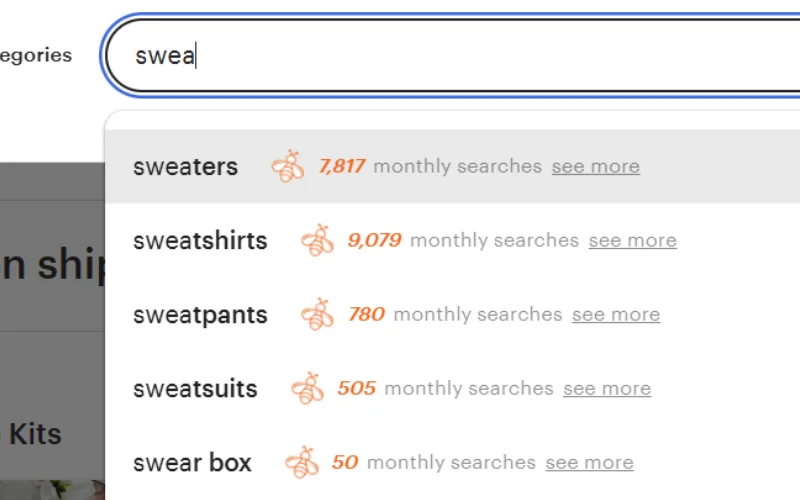
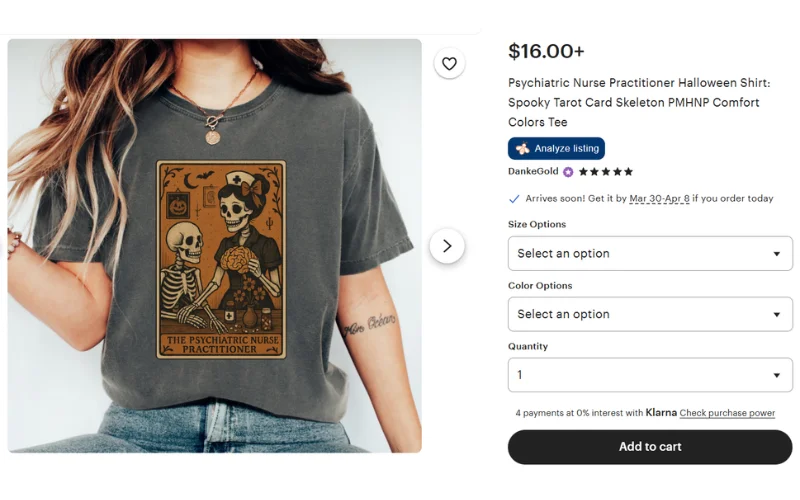
1. Don’t Sell What You Like—Sell What People Are Already Searching For: One of One of the most common mistakes is creating products based on personal preferences instead of real data. Many people design things they think are cute or interesting, but no one is actually searching for them. On Etsy, this often leads to zero sales.
Instead, start with demand: analyze what people are searching for, which products are already selling, and what problems shoppers are trying to solve.
When you do this, you stop guessing and start building around something that already works.
2. Etsy Rewards Specificity (Not General Products):
Trying to sell products that are too broad is a common mistake. Terms like “invitations,” “T-shirts,” or “digital art” have too much competition and are difficult to rank for.
The products that tend to perform best are more specific, such as a “boho editable wedding invitation” or a “digital planner for weekly organization.”
The more specific your product is, the easier it will be to show up in relevant searches and generate sales.
3. Purchase Intent Changes Everything:
Not all products have the same likelihood of selling. Some products are purchased to solve an immediate need, while others are simply browsed for inspiration.
Products with high purchase intent, such as templates, invitations, or planners, tend to sell much faster because they solve a specific problem. Generic products or products without a clear purpose, on the other hand, tend to have lower conversion rates.


4. Never Create a Product Without Validating It First
Creating products without doing research first is one of the biggest mistakes you can make. Before designing any product, analyze whether similar products already exist, how many sales they have, how many reviews they’ve received, and what types of designs they use.
If you find products with a lot of sales, that’s a clear sign that there is demand. Your goal isn’t to reinvent the wheel—it’s to improve on what is already working.
If you understand and apply these principles before opening your shop, you’ll have a huge advantage over most sellers who start without a strategy.
After reading these points, you’re probably wondering: What product should I choose to start with?
The truth is, this is where most people go wrong. Choosing the wrong product can result in zero sales, even if you do everything else correctly.
That’s why we created a course where we guide you step by step through finding a product with real demand, analyzing the competition, and validating your idea before creating it.
In less than 7 days, you can have a product ready to sell, with a clear strategy and without having to guess.
3. Understand How Etsy Works
Before opening your shop, it’s essential to understand how Etsy actually works, because many people fail simply because they don’t understand this from the beginning.
Unlike social media platforms such as Instagram or TikTok, Etsy doesn’t rely on followers or viral content. Instead, it works like a search engine, very similar to Google.
This means shoppers don’t come to Etsy to “browse stores”—they come looking for specific products. For example, someone might search for “wedding invitation template,” “weekly digital planner,” or “motivational women’s gym shirt,” and Etsy will show the products it considers most relevant to that search.
To determine which products appear first, Etsy analyzes factors such as keywords (SEO), click-through rate (CTR), conversions, and the performance history of the product or shop. That’s why it’s essential for your product titles, tags, and descriptions to match what people are actually searching for, while also using attractive images that generate clicks and products that convert those clicks into sales.
Understanding this completely changes your approach. You don’t need followers or to constantly create content. Instead, you need to create products with demand, use the right keywords, and optimize your listings to appear in search results.
If your product doesn’t appear when someone searches for it, it’s almost as if it doesn’t exist.
What Can I Sell on Etsy?
These are the main business models and types of products you can sell on Etsy:
Print on Demand
✔ No inventory required
✔ Physical products
✔ Ideal for beginners with no experience

Archivos digitales
✔ No shipping or inventory
✔ Highly scalable
✔ Perfect for generating income online

Handmade Products
✔ Unique and personalized products
✔ Greater differentiation
✔ Ideal for artisan brands
✔ Requires time and production
✔ Requires shipping management
✔ Less scalable than digital business models
How to Open an Etsy Shop
Opening your first Etsy shop is actually quite simple, but there are a few important details you need to get right if you want to start off on the right foot.
If you want to set up your shop correctly from day one and avoid mistakes that could cost you time and money, you can follow this guide or access the full course, where I walk you through the entire process step by step.
🎓 Free Course: Start Your Etsy Shop from Scratch
Learn how to set up your shop correctly, avoid common mistakes, and get everything ready to start selling.
Available free for a limited time (previously $24).
1. Create Your Etsy Shop
Opening your first Etsy shop is actually quite simple, but there are a few important things you need to get right from the beginning. I’ve created this free course so you don’t miss any important details, and I’ll explain the process here as well.
To get started, go to the official Etsy website and click “Sell on Etsy.” Then select the option to open your shop. From there, Etsy will guide you through a series of basic steps that you’ll need to complete.
💡 Important Before Creating Your Shop:
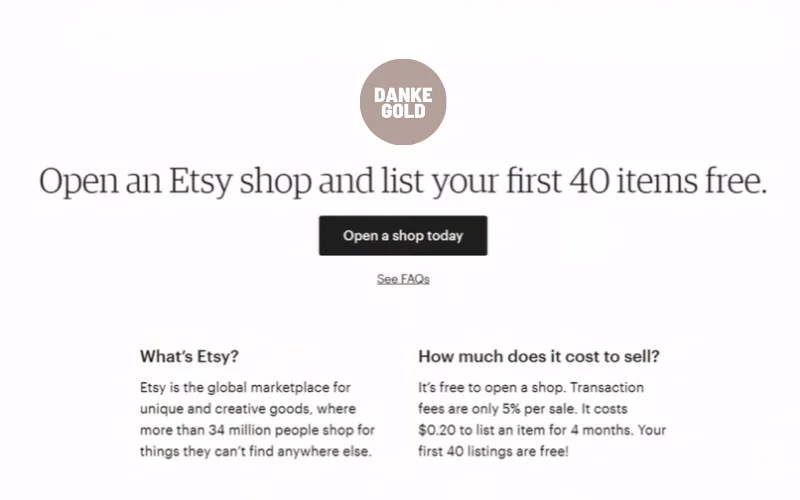
If you sign up for Etsy through this link, you can get 40 free listings (equivalent to $8 USD in listing fees). This is especially useful when you’re just getting started, since Etsy charges a fee for every product you list in your shop. If you create your account directly through Etsy, you won’t receive this benefit.
2. Set Up Your Shop Preferences
In this step, you’ll define some of the basic settings for your shop. Although the initial setup is fairly simple, it’s important to complete it correctly because these settings affect how your shop operates on Etsy.
To get started, Etsy will ask you to select your shop language, the country you’ll be selling from, and the currency in which you’ll receive payments. These options determine how your products are displayed and how your earnings are managed.
Your shop language is especially important because your product titles, descriptions, and tags will be based on it. This directly affects how shoppers find your products on Etsy.
The country you operate from also affects things such as available payment methods, tax settings, and, in some cases, how buyers perceive your shop.
When it comes to currency, Etsy can automatically convert prices, but choosing the right currency from the beginning will make it easier to track your earnings and avoid potential differences caused by exchange rates.
Although this step doesn’t take long, it’s worth paying close attention to each setting and making sure everything is configured correctly before moving forward.
3. Create Your Brand
Your shop name will be the foundation of your brand on Etsy. It’s the main identifier of your business and how shoppers will find, remember, and recognize your products.
During this step, Etsy will ask you to choose a name for your shop that meets certain requirements. It must be between 4 and 20 characters, cannot include spaces or special characters, and must be unique on the platform.
Beyond these requirements, it’s best to choose a name that is easy to remember and spell. It’s also a good idea to choose something related to the type of products you plan to sell, as this can help shoppers quickly understand what your shop is about.
However, it’s important not to spend too much time on this step. Many people try to come up with the “perfect” name and end up delaying the launch of their shop.
In practice, your shop name isn’t what determines whether your business will succeed. There are plenty of successful Etsy shops with simple names because they focus on getting the other important parts of their business right.
So, the best approach is to choose a clear, available name and keep moving forward. Over time, you can build a stronger brand as your shop and product line grow.
4. Add a Product (Even If It’s Just a Test)
To complete the setup of your shop, Etsy will ask you to add your first product or listing. This step is required because it allows Etsy to activate your shop and get it ready to start selling.
At this stage, you’ll need to enter some basic product information, such as images or mockups, the title, description, price, and category. These details help Etsy understand what you’re selling and how to display your product on the platform.
Keep in mind that this first product doesn’t have to be your final one. Many people think they need to create the perfect listing from the very beginning, but at this point, the goal is simply to complete the setup process so you can move forward.
In fact, it’s common for beginners to get stuck here trying to choose the perfect product or perfect every detail, which can unnecessarily delay the launch of their shop.
That’s why I recommend creating a simple product, even if it’s just a test, and moving on to the next steps. You can always edit, optimize, or replace it later with better products.
Once your shop is active, it’ll be much easier to focus on improving your listings and working on the things that actually drive sales.
5. Set Up How You’ll Get Paid
Once you’ve created your shop and added your first product, Etsy will ask you to set up how you’ll receive your payments. This step is essential because it determines how you’ll get paid for your sales.
During this process, you’ll need to enter your banking information and provide some personal details. Etsy uses this information to send you the money from the sales you make on the platform.
You’ll also need to configure certain billing details, such as your address and, in some cases, tax information depending on the country you operate from.
It’s important to keep in mind that Etsy doesn’t transfer your money immediately. The platform processes your payments and then deposits the funds into your bank account according to your deposit schedule.
For this reason, make sure all your information is entered correctly. An error at this stage could cause payment delays or make it difficult to receive your funds.
Although the process is fairly straightforward, this is a key part of setting up your shop because it ensures you can properly manage and receive your earnings once you start making sales.
6. Set Up Your Billing Information
While creating your shop, Etsy will also ask you to set up your billing information. This step is necessary so the platform can properly process the fees associated with using its services.
Here, you’ll need to provide information such as your address, personal details, and, in some cases, tax information depending on the country you’re operating from.
Etsy uses this information to charge fees related to product listings, transaction fees, and other services available on the platform.
It’s important to understand that these fees are a normal part of selling on Etsy, so it’s a good idea to know how they work before you start selling.
Completing this information correctly can also help you avoid administrative issues in the future and keep your account running smoothly.
Although this step may seem a little more technical, it’s a necessary part of setting up your shop correctly on Etsy.
7. Verify Your Identity
During the process of creating your shop, Etsy may ask you to verify your identity. This is a standard step on the platform and is part of Etsy’s security measures to protect both sellers and buyers.
To complete the verification, you may need to provide a valid form of identification and confirm some personal information. In some cases, Etsy may also require additional verification to make sure the information you provide matches correctly.
This process helps maintain a safer marketplace and prevents unauthorized activity.
Identity verification is usually completed quickly, but it’s important to make sure all the information you enter is accurate to avoid delays or issues while activating your shop.
Although it may seem like just another step in the process, identity verification is important to ensure your account is fully activated and ready to operate normally.
8. Enable Two-Factor Authentication
To complete your shop setup, Etsy will ask you to enable two-factor authentication. This feature adds an extra layer of security to your account and helps protect it from unauthorized access.
Once enabled, whenever you sign in from a new device, you’ll need to enter an additional verification code that Etsy will send to your email or phone.
This security measure is widely used across online platforms and is especially important for accounts that handle payments and personal information.
Setting up two-factor authentication is quick and highly recommended to help keep your shop secure from the very beginning.
Once you’ve completed this step, your account will be fully set up and ready to start selling on Etsy.
Common Mistakes When Opening an Etsy Shop
Although opening an Etsy shop is relatively simple, there are a few common mistakes that can affect your progress from the very beginning.
Some of the most common are:
- Choosing the wrong initial settings (language, currency, or country)
- Spending too much time trying to come up with the perfect shop name
- Trying to create the perfect product from the start
- Not understanding how Etsy works as a search engine
- Expecting sales to come automatically
Avoiding these mistakes from the beginning can save you time and help you move forward faster.
What Should You Do After Creating Your Etsy Shop?
Once your shop is set up, the most important part of the process begins.
This is where you’ll need to focus on:
- Choosing a product with proven demand
- Optimizing your titles and keywords
- Creating listings that stand out on Etsy
- Getting your first sales
Creating your shop is only the first step.
What will really make the difference is how well you execute these elements.
Set Up Your Etsy Shop the Right Way from the Start
If you want to avoid mistakes and follow a clear step-by-step process, you can do it here:
🎓 Free Course: Start Your Etsy Shop from Scratch
Learn exactly what to do at each step to get your shop ready to start selling.
👉 Start My Etsy Shop for Free
Available free for a limited time (previously $24)
Frequently Asked Questions About Selling on Etsy
How Much Does It Cost to Open an Etsy Shop?
Opening an Etsy shop requires a one-time payment of approximately $15 USD (this may vary depending on the country), making it one of the most accessible platforms for starting an online business with little money.
After that, the listing fees and other fees for using the platform are as follows:
- Listing fee: $0.20 USD per item, valid for 4 months or until the item sells.
- Transaction fee: 6.5% of the total sale price (including shipping and gift wrapping).
- Payment processing fee: Varies depending on the country (for example, approximately 3% + $0.25 USD in the U.S.).
How Can I Sell My First Product on Etsy?
To sell your first product on Etsy, it is important to understand that it is not about luck and that it is much easier than it seems when you follow a clear process.
It is about applying a series of criteria so that your products and shop have visibility on the platform and can be found by people who are already looking to buy.
The criteria are as follows:
- Choose a product with demand: Many people start by creating products they like, but the problem is that no one is searching for them. Before publishing, make sure that similar products are already generating sales. This allows you to validate that there is demand and avoid wasting time, money, and effort.
- Create a simple product: In the beginning, you do not need to create something complicated. Products with many variations make it harder to publish multiple listings and move quickly. It is much better to create simple products that are easy to produce and scale while you learn how the platform works.
- Optimize your title and keywords: Etsy understands your products through the title, description, and tags. If you do not use the right keywords, your product will not appear in searches. That is why learning how to choose the right keywords is essential so customers can find you.
- Use mockups that generate clicks: On Etsy, everything starts with visuals. The products that perform best usually have a clean, attractive, Pinterest-style aesthetic. There is no need to overcomplicate things: use mockups that already work and focus on making your product look professional.
- Be resilient: The goal is not necessarily to sell your first product, but to collect data. You need to see what gets clicks, what does not work, and what you can improve. Once you find something that works, you simply need to replicate it and eliminate what does not produce results.
What Percentage Does Etsy Charge Per Sale?
For each product sold (including shipping and gift wrapping), Etsy charges approximately 10%–20% of the sale, broken down as follows:
- Transaction fee: 6.5% of the product price (including shipping and gift wrapping, if applicable).
- Payment processing fee: Depends on the country (for example, approximately 3% + $0.25 USD in the U.S.).
- Offsite Ads (optional): Between 12% and 15% if the sale comes from an Etsy ad.
- VAT: Applied depending on the country and automatically deducted.
Even so, Etsy remains one of the most accessible platforms for starting to sell online without a large initial investment.
What Do I Need to Open an Etsy Shop?
To open an Etsy shop, you should have the following things ready:
- Email address: To create your Etsy account.
- Personal identification: This can be a national ID or passport so Etsy can verify your identity and pay you through Etsy Payments.
- Bank account: An account where Etsy can deposit your earnings. If you do not have one, you can open a Payoneer account where you can receive your payments.
- Credit/Debit Card: To pay listing fees.
- Products: You should have your own products ready to list on the platform.
How Do I Get Paid on Etsy?
On Etsy, you get paid through Etsy Payments. This system deposits your earnings, after deducting fees, directly into the bank account you linked to the Etsy platform.
Deposits can be scheduled to be made daily, weekly, biweekly, or monthly, depending on your preferences.
Based on my experience: I scheduled my deposits to be made every Monday directly to my Payoneer account, and every Monday the payment has arrived directly from Etsy. I have not had any problems with this, although some sources indicate that it may take between 3 and 5 business days for the money to appear in your account.
How Does Etsy Protect Sellers?
Etsy has several tools and policies designed to protect sellers and their businesses:
- Purchase Protection Program:
Etsy may cover orders in cases involving shipping issues or customer claims, as long as you comply with its policies (such as shipping on time and using tracking). - Protection Against Abusive Customers:
Etsy does not allow abusive behavior from buyers. If a customer acts inappropriately or tries to take advantage of the system, you can report them, and Etsy may intervene in the case. - Two-Factor Authentication:
Protects your account against unauthorized access by adding an extra layer of security when you log in. - Intellectual Property Protection:
You can report copies or unauthorized use of your designs or products through Etsy's copyright reporting system. - Case Resolution System:
Etsy acts as an intermediary between sellers and buyers in disputes, helping resolve conflicts fairly.
In general, Etsy provides a safe environment for both buyers and sellers, but it is essential to follow its rules to keep these protections active.
In our courses, we teach you how to handle difficult customers, avoid unnecessary returns, and protect your shop from day one.
What Can I Sell on Etsy?
You can sell a wide variety of products on Etsy, but the most important thing is not simply what you can sell, but choosing a product that has demand on the platform.
Many people make the mistake of choosing products at random or basing their decisions only on what they like, without validating whether people are actually searching for those products.
That is why, before you start, it is essential to conduct market research to identify which products are selling and which ones currently have opportunities.
Instead of focusing on “any product,” you should focus on:
- Products that already have proven demand
- Specific niches with less competition
- Ideas that you can easily differentiate
This is what truly makes the difference between a shop that sells... and one that does not.
Is Selling on Etsy Profitable?
Yes, selling on Etsy is still profitable in 2026. The platform has more than 90 million active buyers, making it an excellent opportunity for people who want to start an online business.
It is also ideal for beginners because you do not need previous experience and can start with a very small investment.
Etsy's costs are affordable:
- Listing a product costs approximately $0.20 USD.
- The platform charges between 10% and 20% in fees for each sale.
However, it is important to understand that simply listing products is not enough to generate sales.
Today, Etsy is a competitive platform, so success depends on choosing products with demand, using the right keywords, and differentiating yourself in the market.
That is why our courses do not just teach you how to use Etsy; we also teach you how to find products that actually sell and how to position them to start generating income from the beginning.
What Do I Legally Need to Sell on Etsy?
The legal requirements for selling on Etsy may vary depending on the country, but in general, you need the following:
- Be at least 18 years old.
- Have a valid identification document (national ID, NIE, or passport) that matches your banking information.
- Have a bank account to receive payments through Etsy Payments.
Etsy itself does not require you to have a business license to start selling. However, depending on your country, you may need to formalize your business activity once you begin generating income regularly.
For example, in Spain, it is necessary to:
- Register as self-employed with Social Security.
- Register with the Spanish Tax Agency (IAE) to declare your business activity.
In other countries, such as Chile or Mexico, there are also tax obligations once you begin selling regularly or with commercial intent.
Therefore, it is important to understand that while you can get started easily, as your business grows, you will need to comply with the tax regulations that apply in your country.
Is It Free to Sell on Etsy?
No, selling on Etsy is not completely free, but the costs to get started are relatively low.
When opening a shop, Etsy may charge an initial setup fee (approximately $15 USD), depending on the country and registration process.
In addition, there are other costs associated with using the platform:
- Listing a product costs $0.20 USD (every 4 months or until it sells).
- 6.5% transaction fee per sale.
- Payment processing fee, which varies by country.
In total, the fees for each sale are usually between 10% and 20% of the product price.
In summary, although Etsy is not completely free, it remains one of the most accessible ways to start an online business with a low initial investment.
Do You Need to Be Self-Employed or Have a Business to Sell on Etsy?
No, Etsy does not require you to register as self-employed or as a business to start selling on the platform.
This means you can start selling as an individual without having to create a company from day one, making Etsy a very accessible option for people who want to try starting an online business.
However, it is important to keep in mind that if your activity becomes regular and you begin generating consistent income, you may need to formalize your situation according to the laws in your country.
At that point, you may need to register as self-employed or declare your income, depending on local regulations.
Why Are So Many Sellers Leaving Etsy?
In recent years, many people have decided to leave Etsy, but not because the platform has stopped working. Instead, the level of competition has increased considerably.
Today, opening an Etsy shop is easier than ever, which has resulted in thousands of new sellers listing similar products every day.
This has created three major challenges:
- More competition in almost every niche
- Generic products that fail to stand out
- A lack of strategy among many new sellers
As a result, many people do not make sales quickly and end up leaving the platform.
However, this does not mean that Etsy no longer works.
It means that simply listing products without a strategy is no longer enough.
Today, sellers who understand how to find products with demand, differentiate themselves, and position their products correctly are still getting results.
In fact, this is why many sellers fail... while others manage to stand out.
Is Selling on Etsy Worth It?
Yes, selling on Etsy is worth it, especially if you are looking for a way to start an online business with a low initial investment and access to millions of active buyers.
Etsy is a platform designed to make selling easier, so you do not need technical knowledge or your own website to get started.
However, it is important to understand that it is not quick or automatic money.
Today, Etsy is a competitive marketplace, and your results depend on factors such as:
- Choosing products with demand
- Using the right keywords
- Differentiating yourself within the market
That is why, although many people do not get results, others continue generating consistent income by applying the right strategy.
In short, yes, selling on Etsy is worth it, but only if you approach it strategically rather than treating it as a simple experiment without planning.
Who Pays for Shipping on Etsy?
On Etsy, shipping is generally paid by the buyer. This cost can be displayed in two ways:
- As an additional charge on top of the product price
- Included in the product price if the seller offers “free shipping”
In the case of “free shipping,” the cost does not disappear; it is usually incorporated into the product price.
That is why, as a seller, it is important to calculate your shipping costs correctly to make sure you maintain a profit margin.
How Much Does Etsy Take From a $100 Sale?
On a $100 USD sale on Etsy, the platform charges several fees. Under normal circumstances, Etsy typically takes around 10% of the sale value, although this percentage can increase to as much as 20% if you use advertising or other additional services.
Here is an approximate breakdown:
- Transaction fee (6.5%): $6.50 USD
- Payment processing (approx. 3% + fixed fee): $3.25 USD
- Listing fee: $0.20 USD (paid when the product is listed)
Approximate total without advertising: $9.95 USD (~10%)
This means you would receive around $90 USD from a $100 USD sale, before considering the cost of the product and shipping.
In some cases, costs may be higher if you use additional tools such as:
- Etsy Ads (advertising within the platform)
- Offsite Ads (advertising outside Etsy), which can add an additional 12% to 15% if the sale comes from those ads
In these cases, you could receive between $75 and $85 USD from a $100 USD sale.
In short, Etsy is not a free platform, but its fees remain relatively low compared with other online business models.
What Items Are Not Allowed to Be Sold on Etsy?
Etsy has clear policies about what can be sold on its platform. In general, you cannot sell products that are illegal, dangerous, or that infringe copyright or intellectual property rights.
Some of the items that are not allowed on Etsy include:
- Illegal products or prohibited substances
- Weapons, explosives, or dangerous items
- Counterfeit products or replicas of registered brands
- Products that use intellectual property without authorization, such as logos, characters, phrases, or designs protected by copyright or trademarks (for example, designs from well-known brands, movies, or TV shows)
- Content that infringes copyright or trademarks
- Items that promote hate, violence, or discrimination
- Unregulated medical products or products with misleading claims
- Live animals
In addition, Etsy also restricts certain products that do not fit its marketplace standards, such as mass-produced items without personalization or creative value.
It is important to always review Etsy's official policies before listing a product to avoid penalties or having your shop closed.
Who Is the Richest Etsy Seller?
One of the most successful Etsy sellers is CaitlynMinimalist, a shop specializing in minimalist and personalized jewelry.
According to a report by Ecommerce News, this shop ranked as one of the most successful on the platform in 2025, with results that demonstrate Etsy's real potential as a business.
Some of its most notable figures include:
- More than 2 million total sales
- Estimated revenue of more than $68 million
- Approximately 750 sales per day
- A focus on personalized jewelry (names, dates, gifts)
- Excellent keyword optimization within Etsy
This case demonstrates that Etsy is not just a platform for earning extra income; it can become a highly profitable business when approached with a clear strategy.
Why Is Etsy Holding 75% of My Money?
Etsy may temporarily hold up to 75% of your earnings as part of a payment reserve, a security measure that applies to certain accounts.
This usually happens in situations such as:
- New shops with no sales history
- A sudden increase in order volume
- A perceived risk of claims or refunds
- Shipping issues (tracking, delays, etc.)
The purpose of this reserve is to ensure that the seller can fulfill orders and cover potential customer issues.
The money being held is not lost. It is simply released once the order has been shipped correctly and meets Etsy's requirements (for example, by providing a valid tracking number).
In most cases, funds are released within up to 45 days, although they may be released sooner if the conditions are met.
As your shop builds a positive history (sales, good reviews, on-time shipping), Etsy may stop applying these holds.
Can I Sell My Handmade Items on Etsy?
Yes, Etsy is one of the best platforms for selling handmade products.
In fact, the platform was specifically created for this type of product, along with vintage items and craft supplies.
You can sell a wide variety of handmade products, such as:
- Handmade jewelry
- Home decor
- Clothing and accessories
- Personalized gifts
- Stationery and creative products
However, it is important to keep in mind that Etsy requires products to actually be made or designed by you (in the case of outsourced production).
In addition, making a good product is not enough to generate sales. It is essential to choose a niche with demand and properly optimize your listings within the platform.
Are People Still Selling on Etsy?
Yes, there are still millions of active sellers on Etsy today, and many of them generate consistent income.
In fact, the platform continues to grow every year and has more than 90 million active buyers, which means demand remains very high.
There are also shops that have achieved impressive results, with thousands and even millions of sales, demonstrating that Etsy remains a real opportunity for building an online business.
Does Etsy Give You Money for Shipping?
No, Etsy does not give you additional money to cover shipping.
The buyer pays the shipping cost as part of the purchase, either as a separate charge or included in the product price if you offer “free shipping.”
When you make a sale, Etsy pays you the total order amount (product + shipping, if applicable) and then deducts its fees.
As the seller, you are responsible for arranging and paying for shipping to the shipping provider or carrier.
That is why it is essential to calculate shipping costs correctly and factor them into your pricing to avoid losing money.
Why Is Etsy Charging Me $10 a Month?
Etsy charges approximately $10 USD per month if you are subscribed to Etsy Plus, an optional subscription that provides additional tools for your shop.
This plan includes benefits such as:
- Monthly credits for ads and listings
- Advanced shop customization options
- Discounts on a custom domain
- Access to additional features to improve your brand
It is important to know that this fee is not mandatory.
If you do not want to pay for the subscription, you can cancel Etsy Plus at any time through your account settings and continue selling without any problems.
Etsy works perfectly well without this plan, especially if you are just getting started.
Does Etsy Take 25%?
No, Etsy does not take 25% of every sale under normal circumstances.
In most cases, Etsy charges between 10% and 20% of the sale value, depending on the country and the services you use.
This percentage includes:
- Transaction fee (6.5%)
- Payment processing fee (varies by country)
- Other smaller costs, such as the product listing fee
Under normal circumstances, the total fees are usually closer to 10%.
However, this percentage can increase if you use additional tools such as:
- Advertising within Etsy (Etsy Ads)
- Offsite Ads, which can add an additional cost if the sale comes from those ads
In these cases, the total could approach 20%, but this is not the case for every sale.
In short, Etsy does not take 25%, and it remains a platform with relatively low costs for starting an online business.
Can You Make $10,000 a Month on Etsy?
Yes, it is possible to make $10,000 USD per month on Etsy, but it is not typical and does not happen overnight.
There are shops on the platform that generate thousands of dollars in monthly revenue, especially when they manage to:
- Sell products with high demand
- Rank well within Etsy
- Scale with multiple products or a high volume of sales
For example, shops like CaitlynMinimalist have achieved millions of sales, demonstrating the high income potential of Etsy.
However, it is important to understand that these results are usually the result of time, strategy, and continuous optimization, rather than randomly listing products.
In practice, many sellers start with small amounts of revenue and gradually grow as they learn how the platform works.
In our courses, we teach you this process step by step from scratch and how to increase your chances of generating real income on Etsy.
What Products Will Sell Best on Etsy in 2026?
In 2026, the best-selling products on Etsy have several things in common: personalization, a specific niche, and real value for the customer.
Some of the most notable trends include:
- Personalized jewelry (names, dates, unique gifts)
- Home decor with specific styles (minimalist, boho, etc.)
- Eco-friendly or sustainable products
- Digital templates, such as organizers, planners, or designs for creators (for example, VTubers)
Beyond the type of product, what really makes the difference is choosing an idea that already has demand and adapting it to a specific niche.
The shops that perform best do not sell generic products. Instead, they sell more focused and differentiated versions of products people are already searching for.
Which Countries Buy the Most on Etsy?
According to industry data, most Etsy buyers are concentrated in a handful of countries, with the United States being the largest market.
More specifically, around 56% of the platform's traffic comes from the U.S., followed by the United Kingdom, Canada, Germany, and France.
How Do I List a Product for Sale on Etsy?
To list a product on Etsy, you need to create a listing within your shop. The process is simple and can be completed in just a few steps.
First, log in to your Etsy account and go to your shop dashboard. Then, click the “Add a listing” option.
Next, you will need to complete the listing information:
- Product photos (one of the most important elements)
- A title with keywords
- Product description
- Price
- Category
- Shipping options
Once you have completed this information, you simply need to publish the product, and it will be available for customers to find on Etsy.
Although the technical process is simple, what matters most is how you optimize your title, images, and keywords so your product can gain visibility and generate sales.
How Quickly Does Etsy Pay You?
Etsy does not pay you immediately, but it does have a regular payment system through Etsy Payments. Under normal circumstances, Etsy sends your funds according to the deposit schedule you set in your account, which can be:
- Daily
- Weekly
- Biweekly
- Monthly
Once Etsy sends the payment, it may take between 1 and 3 business days for the money to reach your bank account, depending on your country and bank.
However, if your shop is new, Etsy may temporarily hold some of your funds as a security measure.
As your shop builds a sales history and receives positive reviews, payments generally become faster and more consistent.
Which Latin American Countries Can Sell on Etsy?
According to Etsy's official information, the main Latin American countries that can currently sell on the platform are Argentina, Brazil, Chile, Mexico, and Peru.
These countries have access to Etsy Payments, allowing sellers to receive payments directly into a local bank account.
It is important to keep in mind that this information comes from Etsy's official documentation and may change over time as the platform continues expanding into new countries.
In addition, depending on the country, certain conditions or limitations may apply to the available payment methods.
How Much Does Etsy Charge You to Sell?
Etsy charges several fees for each sale made on the platform. Under normal circumstances, the total cost is usually between 10% and 20% of the sale price, depending on the country and the services you use.
These are the main fees:
- Transaction fee: 6.5% of the product price
- Payment processing fee: approximately 3% + a fixed fee (varies by country)
- Listing fee: $0.20 USD per product (every 4 months or until it sells)
In practice, this means Etsy keeps a portion of the revenue from each sale, but it remains one of the most accessible platforms for starting an online business.
It is important to factor these fees into your pricing to maintain a healthy profit margin.
How Much Does It Cost to List an Item on Etsy?
Listing a product on Etsy costs $0.20 USD for each item you add to your shop.
This fee covers the creation of the listing, which remains active for 4 months, or until the product sells, whichever comes first.
If the product does not sell within that period and you want to keep the listing active, you will need to renew it and pay another $0.20 USD.
This is one of the lowest costs in e-commerce, making Etsy an accessible platform for getting started.
It is important to keep in mind that this cost is separate from the transaction fees, which only apply when you make a sale.
What Are Some Easy Things to Make and Sell on Etsy?
On Etsy, the easiest products to create and sell are usually those that do not require complicated processes, can be produced quickly, and have demand on the platform.
Some common options for beginners include digital products, Print on Demand designs, simple personalized products, and handmade items with straightforward production processes.
These types of products allow you to get started without a large investment and can be easier to scale.
However, the most important thing is not simply choosing something that is easy to make, but making sure there is real demand for that type of product.
Many people choose “easy” products that nobody is searching for, which is why they fail to generate sales.
The key is finding the right balance between ease of creation and market demand.
Can I Sell Internationally on Etsy?
Yes, you can sell internationally on Etsy.
Etsy is a global platform, which means your products can be seen and purchased by people in different countries, especially in high-demand markets such as the United States, United Kingdom, and Canada.
You do not need to live in those countries to sell to customers there. You can manage your shop from anywhere and ship your products to international customers, or sell digital products without having to worry about shipping.
This gives you access to a much larger market than your home country alone.
However, it is important to consider factors such as shipping costs, delivery times, and, in some cases, the language of your listings to reach more customers.
Does Etsy Deposit Money Automatically?
Yes, Etsy handles payments automatically once you have set up your bank account and Etsy Payments.
When you make a sale, the money is not transferred manually. Instead, Etsy sends it according to the deposit schedule you have selected, such as daily or weekly.
After Etsy sends the deposit, it may take a few days for your bank to reflect the money in your account.
For new shops, Etsy may temporarily hold a portion of the funds as a security measure. This is normal in the beginning and may be removed as your shop builds a sales history and establishes trust on the platform.
Why Am I Suddenly Not Getting Sales on Etsy?
A sudden drop in Etsy sales can happen for several reasons. One of the most common is seasonality: some products are highly searched for during a specific period and then experience a decline in demand, such as seasonal items, gifts for special occasions, or designs tied to short-lived trends. Etsy recommends reviewing your statistics and planning around the seasons when your products are most “marketable.”
Another common reason is having fewer active listings than before. Etsy explains that the more products you have listed, the more opportunities you have to appear in searches and make sales. A decline in traffic can also happen if you have fewer active items this year or if some listings have expired without being renewed.
You may also still be getting visits while your conversion rate has dropped. Etsy recommends reviewing metrics such as visits, traffic sources, and conversion in Shop Stats. In general, many sellers see conversion rates in the 1% to 5% range, although this can vary considerably depending on the category and price. If people are visiting but not buying, the issue may be related to factors such as your photos, pricing, value proposition, shipping, or the perceived trustworthiness of your listing.
Your search visibility can also change. Etsy explains that titles, tags, categories, and attributes help your products match relevant searches, while the platform also considers quality and conversion signals when determining which listings rank higher than others. If competitors improve their listings or your listings stop performing as well, you may lose rankings and sales.
A decline can also come from a change in your traffic sources. Etsy Stats allows you to see whether your visits come from Etsy Search, other areas of Etsy, Etsy marketing/SEO, social media, or your own links. If you previously relied heavily on one source and that traffic declines, your sales may drop even if your products are still good.
Finally, competition and overall market conditions also play a role. Etsy acknowledges in its reports that consumer spending, seasonality, and the ability to convert visits into sales directly affect seller results. In other words, sometimes your shop has not “died”; the market around it has simply changed.
In summary, if your sales suddenly drop, check these five things first: whether your product is seasonal, whether your number of active listings has decreased, whether you have lost traffic, whether your conversion rate has dropped, and whether competition in search results has increased. Usually, the answer can be found in one of these areas rather than simply being a matter of luck.
How Can I Save on Etsy Fees?
Saving on Etsy fees does not mean avoiding its commissions, but rather managing your costs effectively to maintain your shop’s profitability.
One of the most important strategies is to optimize how you use advertising (Etsy Ads). Advertising is a useful tool for generating visibility, but if it is not used correctly, it can increase your expenses without generating enough sales.
Some effective ways to reduce costs include:
- Listing products with demand to avoid paying renewal fees without making sales
- Optimizing titles and keywords to improve your search ranking
- Optimizing your Etsy Ads campaigns by investing only in products that already show potential
- Setting your prices correctly to cover fees and maintain your profit margin
- Working with scalable products that you can sell multiple times
The key is not to stop investing, but to invest wisely.
Many sellers lose money on Etsy not because of the fees, but because they fail to optimize their ads or products.
How Do I Activate Etsy Ads?
To activate advertising on Etsy (Etsy Ads), you need to do it from your shop dashboard. The process is simple:
First, log in to your account and go to your Shop Manager. Then, go to the Marketing section and select Etsy Ads.
From there, you can:
- Activate your ads
- Set a daily budget
- Choose which products you want to promote
Once activated, Etsy will begin showing your products across the platform to increase their visibility.
It is important to start with a controlled budget and analyze which products generate the best results.
Not all products perform equally well with advertising, so it is important to continuously adjust and optimize your campaigns.